
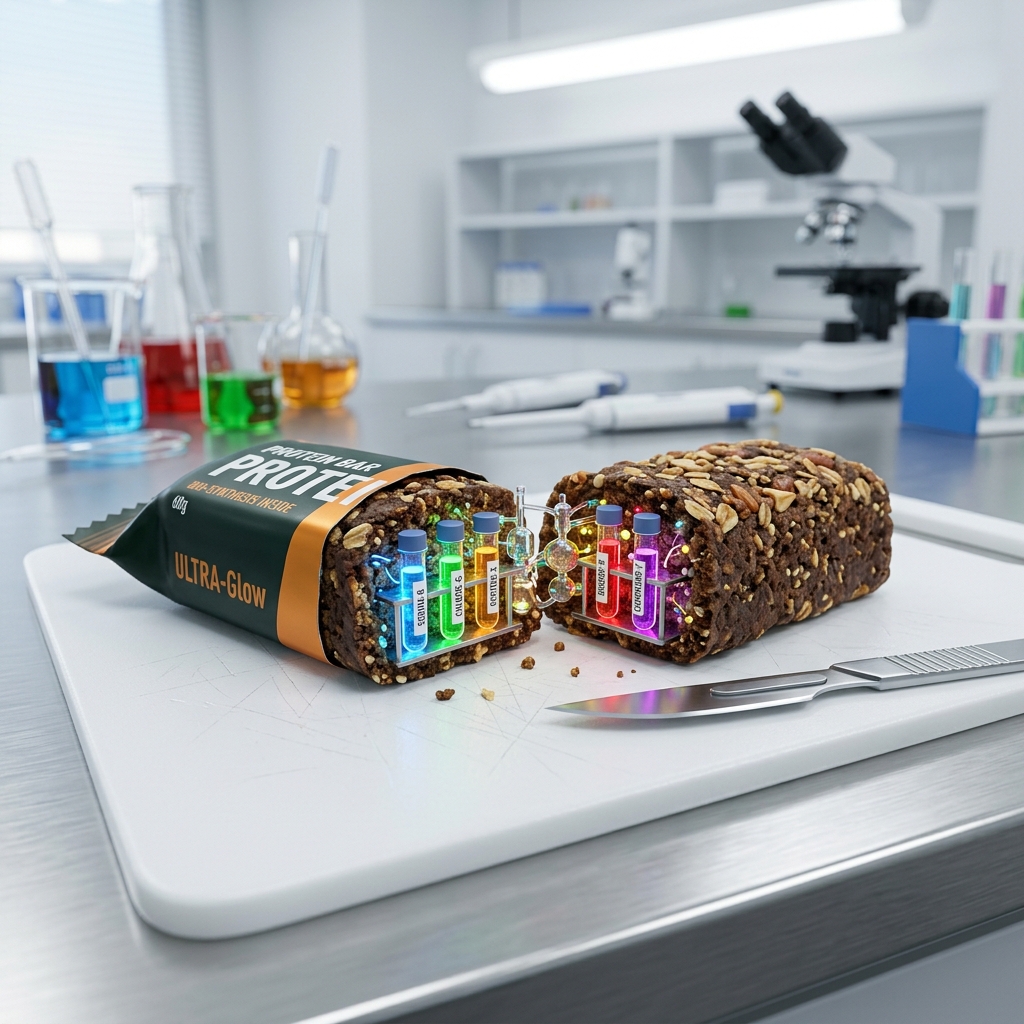
The protein bar category is one of the most successful marketing achievements in modern food history. Over the past two decades, the industry has persuaded millions of health-conscious consumers that a product manufactured through a complex industrial process — combining protein isolates, synthetic sweeteners, emulsifiers, humectants, and a small number of recognizable whole food ingredients — is fundamentally similar to eating a handful of almonds and a piece of fruit.
It is not. And the NOVA food classification system makes this visible in a way that calorie counts and protein grams do not.
What NOVA Actually Measures
NOVA is a food classification framework developed by researchers at the University of São Paulo and now used as a reference standard in public health nutrition in more than 30 countries. Unlike nutrient-based scoring systems that evaluate foods through the lens of individual macronutrients or micronutrients, NOVA classifies food based on the extent and purpose of industrial processing.
The system uses four categories. NOVA 1 covers unprocessed or minimally processed foods: whole fruits, vegetables, eggs, plain meat, dried legumes, milk. NOVA 2 covers culinary ingredients — salt, sugar, oil, flour — that are used in cooking but not consumed independently. NOVA 3 covers processed foods: products made by adding culinary ingredients to whole foods, such as canned fish in olive oil, cheese, or naturally fermented bread. NOVA 4 covers ultra-processed food: formulations designed to require no cooking, engineered for hyper-palatability, and dependent on industrial additives for their texture, flavor, shelf stability, and appearance.
Most commercially available protein bars, including many prominently marketed as "clean," "natural," or "whole food," are NOVA 4 products. The question is not whether they contain some recognizable ingredients — most do — but whether the overall formulation and processing methodology places them in the category of food or in the category of industrially engineered food-like product.
The Anatomy of a NOVA 4 Protein Bar
Consider a representative example from a leading "clean" protein bar brand — one that uses whole food photography in its marketing, emphasizes its absence of artificial sweeteners, and is prominently sold in natural grocery channels.
A typical ingredient list from this category includes: protein blend (whey protein isolate, milk protein isolate), almonds, dates, chicory root fiber (inulin), sunflower oil, cocoa, natural flavors, soy lecithin, mixed tocopherols.
At first glance, this appears benign. But a NOVA analysis surfaces several concerns.
- Whey protein isolate and milk protein isolate are not whole food ingredients. They are industrially fractioned proteins, extracted from dairy through processes that eliminate most of the fat, lactose, and non-protein components of milk. The resulting powder is then recombined with other ingredients to engineer a desired protein-per-calorie ratio. The human body's metabolic response to isolated protein fractions differs from its response to protein consumed as part of a whole food matrix.
- Chicory root fiber (inulin) is an extracted prebiotic fiber used in ultra-processed products to increase fiber content on the nutrition label and add sweetness without sugar. Consumed in the quantities present in some protein bars, inulin has been associated with significant gastrointestinal distress in sensitive individuals, including bloating, cramping, and diarrhea. It is not how humans have historically consumed dietary fiber — which comes embedded in the cellular structure of whole plant foods.
- "Natural flavors" is a catch-all term that the FDA defines loosely enough to encompass hundreds of distinct chemical compounds. It is not equivalent to the natural flavor of a real food.
- Soy lecithin is an emulsifier used to create smooth texture in products that would otherwise separate or have an unappealing mouthfeel. Its function is to compensate for the absence of natural food structures.
A product built from protein isolates, extracted fibers, and engineered flavors is not a whole food with a convenient format. It is an ultra-processed product with a whole food marketing narrative.
What the Research Says About Ultra-Processed Protein Sources
The growing body of research on ultra-processed food does not suggest that protein bars are acutely harmful to most people. What it suggests is that the regular consumption of ultra-processed foods — as a category, across their range of types — is independently associated with increased risk of obesity, cardiovascular disease, type 2 diabetes, depression, and all-cause mortality, even after controlling for total caloric intake and nutrient composition.
The leading hypothesis for this association is that ultra-processed foods disrupt the normal regulatory signals that govern appetite, satiety, and metabolic function — not primarily through any single harmful ingredient, but through the cumulative effect of the industrial formulation process on the food matrix itself.
Practical Guidance: Reading a Protein Bar Label Through a NOVA Lens
Not all bars score equally, and some are meaningfully better choices than others within the ultra-processed category. When evaluating a protein bar using NOVA principles, consider the following:
- Ingredient list length and recognizability: shorter lists with more whole food ingredients (nuts, seeds, whole grains, dried fruit) suggest a less industrially processed product.
- Protein source: whole food proteins (nuts, seeds, legumes, whole dairy) vs. isolated or fractionated proteins (whey isolate, pea protein isolate, soy protein concentrate). The former are NOVA-consistent; the latter are markers of ultra-processing.
- Fiber source: whole food fiber embedded in whole ingredients vs. added inulin, chicory root, or isolated fiber concentrates. The former supports gut health in ways the latter does not replicate.
- Sweetener type: whole food sweeteners (dates, honey) vs. concentrated sweetener extracts (monk fruit concentrate, erythritol, tagatose) vs. artificial sweeteners.
- Emulsifiers and stabilizers: sunflower lecithin, soy lecithin, carrageenan, and guar gum all signal industrial formulation aimed at texture engineering rather than whole food composition.
The most honest answer, for most protein bars currently on the market, is that they are NOVA 4 products delivering a nutritionally adequate dose of protein in an ultra-processed carrier. For most people, most of the time, a handful of mixed nuts, a piece of whole fruit, or a portion of plain Greek yogurt is a NOVA-consistent alternative.
We recognize that convenience is real, that not every eating context accommodates whole food alternatives, and that some protein bars represent meaningfully better choices than others. Our NOVA scoring tool is designed to help you navigate exactly these distinctions — not to apply a binary good/bad judgment, but to give you accurate information about what you're actually eating.
Cut Through the Protein Hustle
You shouldn't need a degree in food science to figure out if your post-workout snack is actually good for you. The "clean" packaging is designed to confuse, but the solution is surprisingly simple.
By scanning that protein bar with the Rock The New Food Pyramid app, you can bypass the front-label claims and see its true NOVA processing score instantly. The app translates those industrial protein isolates and artificial sweeteners into plain English, helping you swap out engineered snacks for genuinely clean fuel.
Stop paying premium prices for ultra-processed food. Get the RTNFP app and put the real science in your pocket.