Okay, let's be real for a second.
You've stood in the grocery aisle. You've squinted at a label. You've tried to decode "hydrolyzed vegetable protein" while your kid is tugging on your sleeve asking for the thing with the cartoon character.
Multiply that by every single product in your cart. Multiply that by every single trip. Multiply that by the rest of your life.
That's exhausting. And it's been holding families back for decades.
But here's the good news — the era of squinting at tiny print is ending.
What Food Scanning Actually Looks Like Right Now
In 2026, the game is changing. Fast.
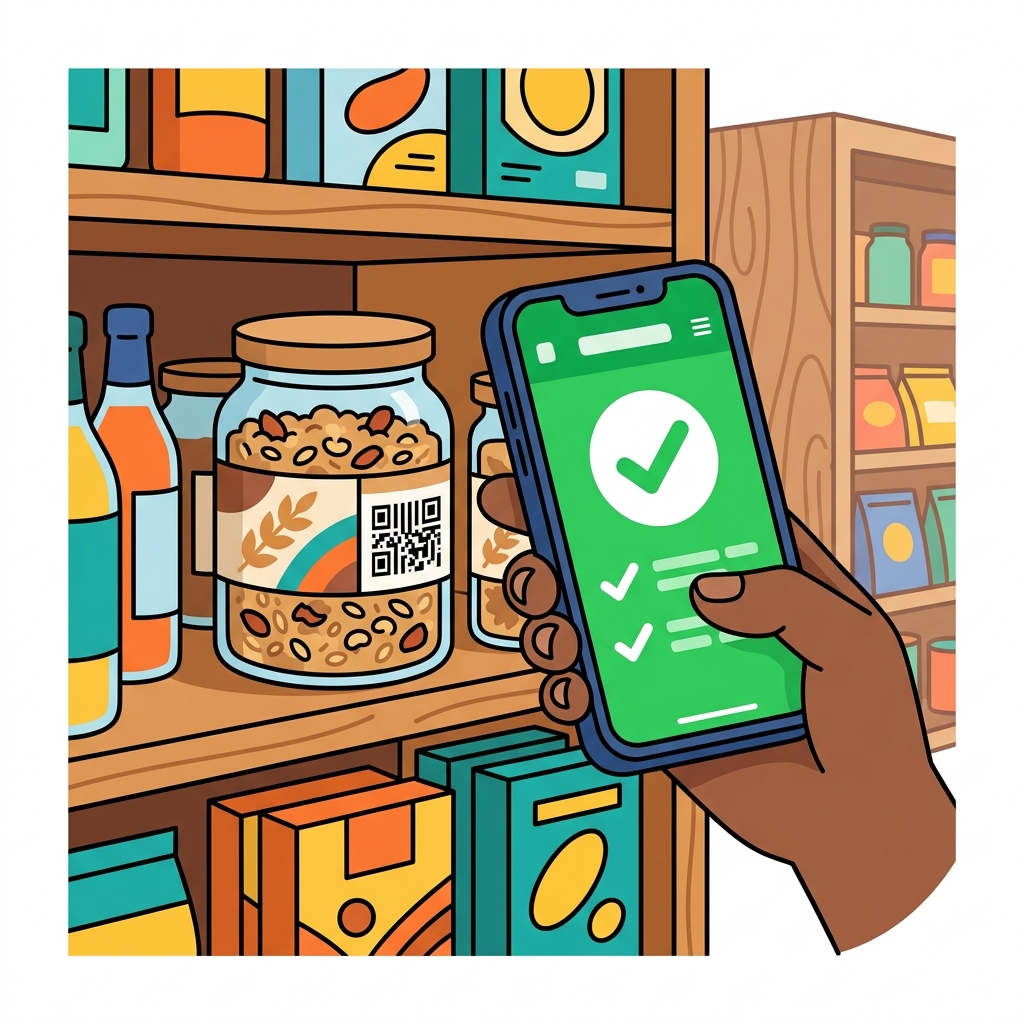
You walk into the store. You open Gator Vision on your phone. You scan a barcode — or even better, you point your camera at the shelf and scan a whole section in a single pass.
In seconds, you get:
- NOVA Classification — How processed is this food? (No, you don't have to memorize the system. Gator Vision does it for you.)
- Gator Grade Score — A clean 0–100 score that tells you exactly where this product lands.
- Color-Coded Risk Flags — Simple, instant flags for additive concerns. No guessing.
- Healthy Swap Suggestions — Better alternatives in the same category, right there on your screen.
This isn't a gimmick. This isn't a someday feature. This is happening now.
And for anyone who's ever felt overwhelmed by the sheer volume of food decisions every day — this is a game-changer.
Why the Old Way Was Holding You Back
Let's look at why reading labels by hand was never going to cut it:
It's slow. You can't check 50 products in 10 minutes. Nobody can. Not even a nutritionist.
It's incomplete. You might miss an ingredient buried halfway down the list. You might misread a claim that's designed to confuse you. (And yes, that's intentional on the industry's part.)
It's inconsistent. You're not a food scientist. You don't know which additives are concerning and which are benign. And honestly, neither does the average employee at the store.
Gator Vision solves all three problems. It's fast. It's built on the NOVA science. And it doesn't get tired at 7 PM after a long day — unlike the rest of us.
The Technology Is Finally Catching Up
Here's the thing: food scanning isn't new. People have been talking about it for years. But the technology has been stuck — not accurate enough, not fast enough, not smart enough.
That changed in 2025 and 2026.
AI can now read a shelf faster than you can blink. It can cross-reference ingredients against established classification systems in seconds. It can flag risks that wouldn't show up on any manufacturer's website.
RTNFP's Gator Vision and Gator Grade are leading this category. But the trend is bigger than us. The whole food-tech space is moving in this direction — and your phone is about to become the most powerful nutrition tool you've ever had.
Your Unfair Advantage (In a Good Way)
Here's what separates you from most shoppers:
Most people still read labels by hand. They still guess. They still trust the marketing claims on the front of the package.
You're not most people.
You're shopping with an unfair advantage — and that advantage only gets stronger as the technology evolves.
And here's what I love about this: you're not just feeding your family better. You're leading the way. You're proving that families can make smarter choices when they have the right tools.
This Is What Progress Looks Like
Ten years ago, the idea of scanning a shelf and getting a real-time nutrition analysis would have sounded like science fiction.
Today, it's in your pocket.
You're not just shopping smarter. You're shopping with an unfair advantage.
And that advantage is only going to get stronger.
Let's go. 🐊
Download Rock The New Food Pyramid. Scan your groceries. Know what you're feeding your family.
References
Monteiro, C. A., Cannon, G., Levy, R. B., et al. (2019). Ultra-processed foods: what they are and how to identify them. Public Health Nutrition, 22(5), 936-941.
Rock The New Food Pyramid. (2026). Gator Vision Technology: AI-Powered Food Label Analysis. Internal technical report.
Rock The New Food Pyramid — Scan. Know. Choose Better.