
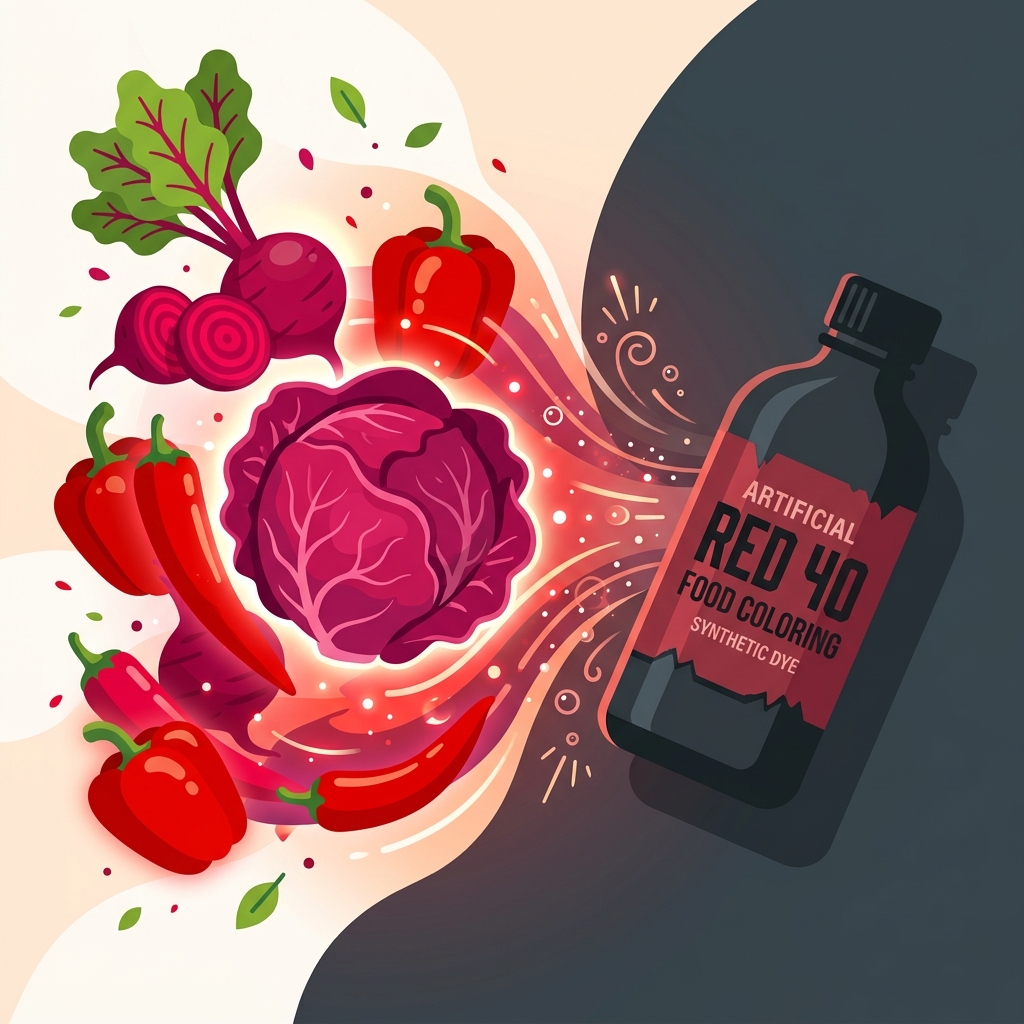
If you’ve been paying attention to the dye war, you know what’s being taken out of America’s food supply: Red 40, Yellow 5, Yellow 6, Blue 1, Blue 2, Green 3, BHA, propylparaben, and the already-banned Red 3. But here’s the question manufacturers are now scrambling to answer: what goes in their place?
The answer is a small but rapidly growing roster of natural color additives that the FDA has fast-tracked for approval. None of these are new to nature — humans have been using plants and minerals to color food for thousands of years. What’s new is the FDA’s willingness to clear them quickly, and the food industry’s sudden urgency to use them.
The Approved Replacements
As of early 2026, the FDA has authorized six new natural color additives under the current administration. Here’s what’s actually getting added to your food now:
Galdieria Extract Blue — Approved May 2025. Made from a unicellular red algae (Galdieria sulphuraria) through water-based extraction. Already cleared for use in nonalcoholic beverages, smoothies, fruit juices, milkshakes, yogurt drinks, candy, chewing gum, frostings, ice cream, puddings, and custards.
Butterfly Pea Flower Extract — Approved May 2025 (with expanded uses). Made from the dried petals of the Clitoria ternatea plant. Produces shades from bright blue to purple to green depending on the pH of the food. Approved for use in beverages, candies, ice cream, yogurt, snack mixes, pretzels, and chips.
Calcium Phosphate — Approved May 2025. A naturally occurring white mineral compound also found in your bones and teeth. Used to produce white coloring in candies, poultry, and other applications.
Gardenia (Genipin) Blue — Approved July 2025. A natural blue made from the genipin pigment in gardenia fruit. Approved for sports drinks, flavored waters, fruit drinks, ready-to-drink teas, and hard and soft candies. Heat-stable, which makes it useful for baking applications.
Beetroot Red — Approved as a new natural color additive in early 2026. Just what it sounds like — the deep red pigment from beets. Long used as a colorant abroad; now formally approved as a U.S. color additive without batch certification requirements.
Spirulina Extract (Expanded Uses) — Approved for expanded use in early 2026. Spirulina is a blue-green algae that’s been used as a food colorant for years. The expanded approval lets manufacturers use it in more product categories than before.
The Catch (There’s Always a Catch)
Natural doesn’t automatically mean better. There are real trade-offs manufacturers are struggling with, and you should know about them as a consumer.
First, natural colors are less stable than synthetic dyes. They fade in sunlight. They shift with heat. They change with pH. Spirulina, for example, doesn’t hold up well in acidic beverages or high-heat baking. Butterfly pea flower changes color depending on what it’s mixed with. Manufacturers are working around these limits, but it means more careful formulation — and sometimes products that look slightly different from what you remember.
Second, natural colors are more expensive. Not by an outrageous amount, but enough that some companies are quietly looking for ways to use less colorant overall, or to lean on packaging design to compensate for less vivid product.
Third, “natural” doesn’t mean “allergen-free” or “universally acceptable.” Carmine, another natural red colorant, is made from crushed insects. That’s a non-starter for vegetarians, vegans, and people with allergies to it. Annatto, another popular natural alternative, can trigger reactions in a small but real percentage of people. Always read the label.
What This Looks Like on the Shelf
You’re going to start seeing big changes in product appearance over the next 18 months. The bright neon-red Twizzlers your kids know? They might come back looking more like a deeper, slightly muted brick-red. The electric blue of certain sports drinks? Possibly a softer denim shade thanks to butterfly pea or galdieria. The vivid orange of cheese-flavored snacks? Likely a warmer, more golden tone from annatto or paprika extract.
This is not a downgrade. It’s what real food actually looks like. Generations of American consumers have been conditioned to expect colors that don’t exist anywhere in nature. Returning to natural pigments isn’t a regression — it’s a recalibration of what we should have been seeing all along.
How to Use This Information
When you’re reading labels, here’s what to look for in the new natural-color era:
- Beetroot extract or beet juice powder — reds and pinks
- Annatto, paprika extract, turmeric, or carrot juice — oranges and yellows
- Spirulina, gardenia blue, butterfly pea, or galdieria — blues and greens
- Caramel color — browns (note: there are different grades; not all are equally clean)
- Calcium phosphate or titanium dioxide alternatives — whites
If you see these instead of “Red 40” or “Yellow 5,” the manufacturer has done the work. That’s a product worth supporting with your dollars.
From Lab to Kitchen with RTNFP
Knowing what’s replacing the synthetic dyes is one piece of the puzzle. Knowing which products on your local shelf have actually made the switch is another. That’s where Rock The New Food Pyramid comes in. We track the changes, decode the labels, and help you find the brands that are doing right by your family — not just promising they will someday. Thanks for reading, and thanks for caring enough to know what’s in the box.
Stay informed. Eat real. Rock The New Food Pyramid.
#RockTheNewFoodPyramid #RTNFP #NaturalColors #DyeFree #CleanLabel
#MAHA #RealFood #ReadTheLabel #PlantBased #Spirulina
#BeetrootRed #ButterflyPea #ToxinFreeKids #FoodReformulation
Sources
- FDA, “Tracking Food Industry Pledges to Remove Petroleum Based Food Dyes” — Link
- H2 Compliance, “FDA Approves Natural Food Colors” — Link
- Nation's Restaurant News, “FDA Approves Three Natural Alternatives for Banned Food Dyes” — Link
- Nutritional Outlook, “FDA Revises 'No Artificial Colors' Labeling Policy to Support Shift Away from Synthetic Dyes” — Link
- CNN, “FDA Allows Another Natural Food Dye, Label Changes to Make Spotting Artificial Colors Easier” — Link
- Sensient Food Colors, “Butterfly Pea Flower Extract Receives FDA Approval as a Color Additive” — Link