
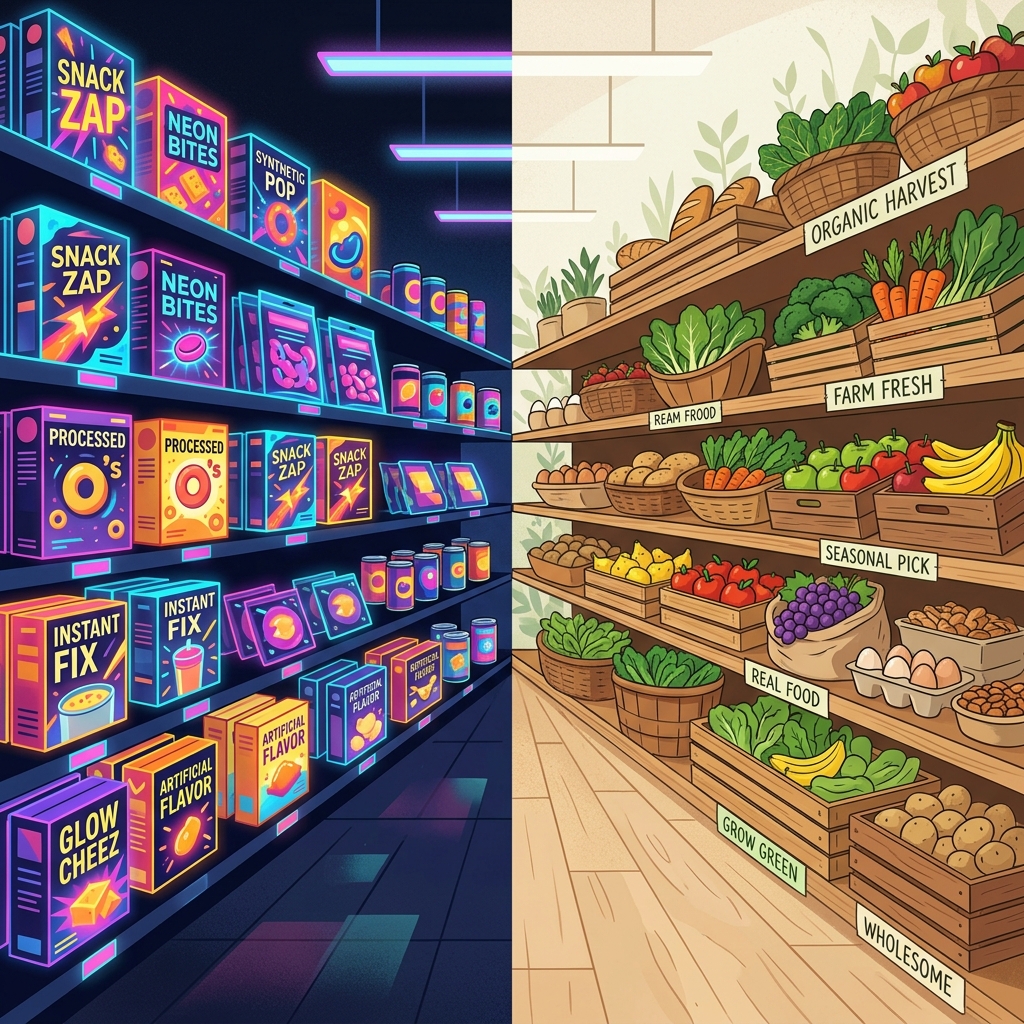
Walk down any aisle in any American grocery store and you’re surrounded by ultra-processed foods. Cereal, frozen meals, snack bars, sodas, packaged baked goods, ice cream, hot dogs, instant noodles, plant-based meat substitutes, flavored yogurts, fruit drinks, breakfast pastries — the list goes on and on. By some estimates, ultra-processed foods now make up nearly 60 percent of the calories Americans consume.
And yet, here’s the strange part: there is no official U.S. government definition of “ultra-processed food.” None. Researchers use one classification system, journalists use the term loosely, marketers use it however suits their pitch. The FDA, the USDA, and the federal government as a whole have never published an official definition.
That’s about to change. And the change matters more than most people realize.
The Definition Coming in 2026
The FDA, working with the USDA and other federal agencies, has committed to developing a federal government-wide definition of “ultra-processed foods” in 2026. They’ve already collected public comments through a 2025 Request for Information. Now they’re analyzing those responses and working toward a formal definition.
The most widely-used existing framework is the NOVA classification, developed by Brazilian researcher Carlos Monteiro and his team. NOVA divides foods into four groups: unprocessed or minimally processed (whole foods, basic flour, milk), processed culinary ingredients (oil, butter, sugar, salt), processed foods (canned vegetables, simple cheeses, freshly made bread), and ultra-processed foods (industrial formulations made mostly from substances extracted from food, plus additives). NOVA is used in scientific research worldwide, and it will likely heavily influence whatever the U.S. government eventually adopts.
Why the Definition Matters So Much
A definition isn’t just academic. Once UPFs are officially defined, they can be officially regulated. That regulatory action could include any of the following:
- Front-of-package labeling requirements (“High in Ultra-Processing” warnings, similar to the ones used in Chile, Mexico, and other countries) —
- Restrictions or bans in school nutrition programs —
- Exclusions from federal nutrition assistance programs (SNAP, WIC) —
- Special taxes (similar to soda taxes) —
- Marketing restrictions, especially advertising aimed at children —
- New disclosure requirements for restaurants and food service —
None of these can happen until there’s a definition to apply them to. That’s why “what counts as ultra-processed” is so contested — the food industry knows that whichever way the line gets drawn, an enormous chunk of their products will end up on one side of it.
The Health Stakes
The research on ultra-processed foods has gotten much harder to ignore over the past five years. Multiple large studies have linked high UPF consumption to obesity, type 2 diabetes, cardiovascular disease, certain cancers, depression, and accelerated cognitive decline. The mechanism isn’t fully understood, but the patterns show up consistently across populations and methodologies.
The most compelling research has tried to control for nutritional content — comparing UPFs and minimally processed foods with similar calorie, fat, sugar, and sodium profiles — and still finds health differences. That suggests something about the processing itself, not just the nutritional composition, is contributing to the harm. Possibilities include effects on the gut microbiome, the speed at which UPFs are digested and absorbed, the additives and emulsifiers that don’t appear in whole foods, and the lack of food-matrix structure that affects satiety.
Whatever the mechanisms, the bottom line is consistent: people who eat more ultra-processed food, on average, get sicker. Period. The argument is no longer about whether UPFs are bad for health. It’s about how much, and what to do about it.
The Definitional Fights to Come
Here’s where things will get heated. Once the FDA proposes a definition, the food industry will absolutely fight over the specifics. Expect debates like:
Is whole-grain bread ultra-processed? — Most commercially baked breads contain emulsifiers, preservatives, and dough conditioners. Are they UPF or just processed?
What about flavored Greek yogurt? — Yogurt is fermented milk, but flavored varieties typically contain stabilizers, gums, artificial flavors, and added sugars.
Plant-based meat alternatives? — Many of these products are textbook ultra-processed by NOVA standards, even though they’re marketed as healthier and more sustainable than conventional meat.
Protein bars, even “clean” ones? — Most contain protein isolates, sweeteners, fiber additives, and emulsifiers. Even the boutique brands often qualify as UPF under strict definitions.
The food industry will push for a narrow definition. Public health advocates will push for a broad one. The final rule will be somewhere in the middle, and where exactly that line falls will determine which products end up on warning labels and which ones get a pass.
How to Spot UPFs Without Waiting for the FDA
You don’t need to wait for an official definition to start identifying ultra-processed food in your own kitchen. Use these practical signals:
- If the ingredient list contains substances you wouldn’t find in a home kitchen (high-fructose corn syrup, xanthan gum, soy protein isolate, mono- and diglycerides, modified food starch), it’s probably UPF. —
- If the ingredient list is more than five or six items long, it’s probably UPF. —
- If the product can sit on a shelf for months without spoiling, that’s usually a sign of significant processing. —
- If it’s ready-to-eat, designed to be eaten without preparation, and shelf-stable, it’s very likely UPF. —
- Cookies, soda, hot dogs, frozen pizza, packaged breakfast cereal — mostly UPF.
- Apples, eggs, dried beans, plain yogurt, raw chicken, brown rice — not UPF.
The Bigger Picture
The UPF definition isn’t a magic solution. It won’t single-handedly fix America’s diet. But it’s a foundational policy step that has to happen before any meaningful regulation of the modern industrial food system is possible. It’s the line in the sand. Once it’s drawn, everything else — labeling, school meals, public health campaigns — can finally rest on a shared definition of what we’re actually talking about.
That definition is coming in 2026. Whatever it ends up being, it will reshape how we talk about, regulate, and ultimately consume the foods that fill most American grocery carts.
Eat Less of It — Starting Now — with RTNFP
You don’t need a federal definition to know an ultra-processed food when you see one. Rock The New Food Pyramid is here to help you cut through the marketing, decode the labels, and choose the real foods that genuinely nourish your family. We’ve been doing this work since long before Washington caught up. Thanks for reading — and thanks for choosing real food.
Stay informed. Eat real. Rock The New Food Pyramid.
#RockTheNewFoodPyramid #RTNFP #UltraProcessed #UPF #RealFood
#MAHA #FoodPolicy #CleanEating #ReadTheLabel #ToxinFreeKids
#WholeFoods #NutritionMatters #ChildHealth #ConsciousConsumer #FoodLabeling
Sources
- FDA, “Human Foods Program 2026 Priority Deliverables” — Link
- Food Business News, “Dealing with the Different Ways MAHA Approaches Regulations” — Link
- Texas Farm Bureau, “FDA Outlines 2026 Food Safety and Nutrition Priorities” — Link
- FoodBev Media, “GRAS Reform and UPF Definition Among Key Focus Areas Highlighted in New MAHA Strategy” — Link
- Chemical & Engineering News, “States Expected to Leapfrog Feds on Food-Chemical Regulation” — Link