When most people think of West Virginia, they don’t think of food policy revolution. But that’s exactly what’s happening — and the rest of the country is paying attention.
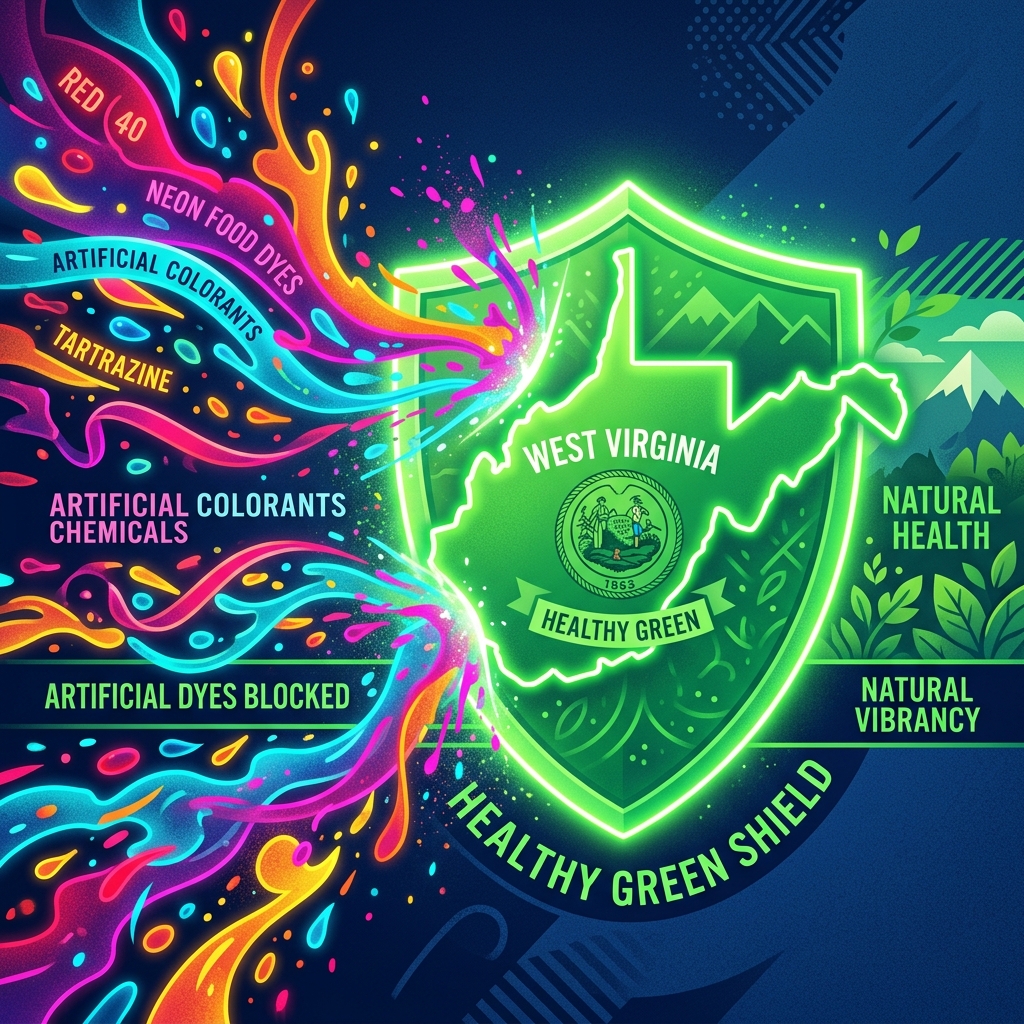
In March 2025, Governor Patrick Morrisey signed House Bill 2354 into law, making West Virginia the first state in the nation to enact a comprehensive ban on synthetic food dyes and two controversial preservatives. It passed the State House and Senate nearly unanimously — almost unheard of in today’s political climate. Here’s what every parent, grandparent, and consumer needs to understand about it.
What the Law Bans
HB 2354 targets nine specific ingredients: the synthetic dyes Red 3, Red 40, Yellow 5, Yellow 6, Blue 1, Blue 2, and Green 3, plus the preservatives BHA (butylated hydroxyanisole) and propylparaben. If you’ve ever read the label on a box of cereal, a sports drink, a snack cake, or a bag of candy, you’ve almost certainly seen these listed. They’re responsible for the unnaturally vivid colors that make processed food look “fun.”
This is the broadest list of any state ban in the country. California’s much-publicized 2023 law only banned four ingredients. West Virginia’s list is more than twice as long.
The Two-Phase Rollout
The law was designed in two stages. Phase One — School Meals — took effect August 1, 2025. As of the start of the 2025-2026 school year, no food containing any of the seven listed dyes can be served in any school nutrition program in West Virginia. This phase is in effect right now.
Phase Two — the Statewide Retail Ban — was scheduled for January 1, 2028. It would prohibit the sale of any food, drink, confectionery, or condiment containing the banned ingredients anywhere in the state. But here’s where things get complicated.
The Court Challenge
In October 2025, the International Association of Color Manufacturers filed suit in federal court challenging HB 2354 as unconstitutional. On December 23, 2025, U.S. District Judge Irene Berger issued a preliminary injunction blocking the 2028 retail ban from being enforced while the case proceeds, ruling the law was unconstitutionally vague.
Crucially, the school meals provision was not blocked — that part of the law remains fully in effect. West Virginia kids are still being protected from these dyes at lunch. But the broader retail ban is on hold. This isn’t the end of the story; it’s a procedural setback. The state can revise the language, the legislature can reintroduce a clearer version, and the case will continue. As of today, the 2028 deadline is paused, not cancelled.
Why These Ingredients?
Each of these ingredients has accumulated decades of research suggesting cause for concern. Red 3 was banned by the FDA itself in January 2025 after being shown to cause cancer in lab animals — a finding that, by law, required the agency to act. It had been banned in cosmetics since 1990. It took 35 years to get it out of food.
Red 40, Yellow 5, Yellow 6, and the other azo dyes have been linked in multiple studies to behavioral effects in children, including hyperactivity. The European Union requires foods containing these dyes to carry a warning label. Many manufacturers, rather than slap a warning on their products, simply reformulate their European versions with natural colors. The same Skittles, the same Lucky Charms, the same Kraft Mac & Cheese — sold in Europe without synthetic dyes, sold in America with them.
BHA is classified by the National Toxicology Program as “reasonably anticipated to be a human carcinogen.” Propylparaben is an endocrine disruptor. These aren’t fringe concerns — they’re mainstream scientific findings that have been ignored or downplayed for decades.
What You Can Do Right Now
You don’t need to wait for laws to change. You can read labels today. Look for these on packages and consider passing on the product:
- Red 3, Red 40, Yellow 5, Yellow 6, Blue 1, Blue 2, Green 3 —
- BHA (butylated hydroxyanisole) —
- Propylparaben —
Natural alternatives exist — beet juice, turmeric, paprika extract, spirulina, annatto, and red cabbage extract can produce vivid colors without the health concerns. The technology is there. The will is increasingly there. And in West Virginia, the law is there too.
Don’t Wait for Lawmakers — Start Today with RTNFP
Laws move slowly. Court cases move even slower. Your family eats three times a day, every day, right now.
That’s exactly why we built Rock The New Food Pyramid — to translate the science, name the ingredients that don’t belong in your cart, and point you toward real food that nourishes the people you’re feeding. No guilt trips. No fad diets. Just clear, practical guidance you can use on your next grocery run.
West Virginia’s lawmakers did something brave. You can too. It starts at your next grocery run.
Stay informed. Eat real. Rock The New Food Pyramid.
#RockTheNewFoodPyramid #RTNFP #DyeFree #CleanLabel #FoodFreedom
#MAHA #RealFood #ReadTheLabel #ToxinFreeKids #WestVirginia
#HB2354 #DyeWar #FoodPolicy #HealthyKids #ParentsAgainstDyes