The New Food Pyramid
For decades, the old food pyramid told us to load up on bread, pasta, and cereal. The result? Rising obesity, diabetes, and heart disease. It's time for an upgrade.
What Went Wrong?
In 1992, the USDA introduced the original food pyramid. At the very base? 6–11 servings of bread, cereal, rice, and pasta per day. Fats were demonized. Sugar got a free pass. The food industry loved it. Your waistline? Not so much.
42%
of U.S. adults are now obese — an all-time high
37M+
Americans have diabetes, with millions more pre-diabetic
#1
Heart disease remains the leading cause of death in the U.S.
The science has evolved. The 2025–2030 Dietary Guidelines launched the "Real Food" initiative, flipping the old pyramid on its head. The message is simple: eat real food.
The Pyramid, Layer by Layer
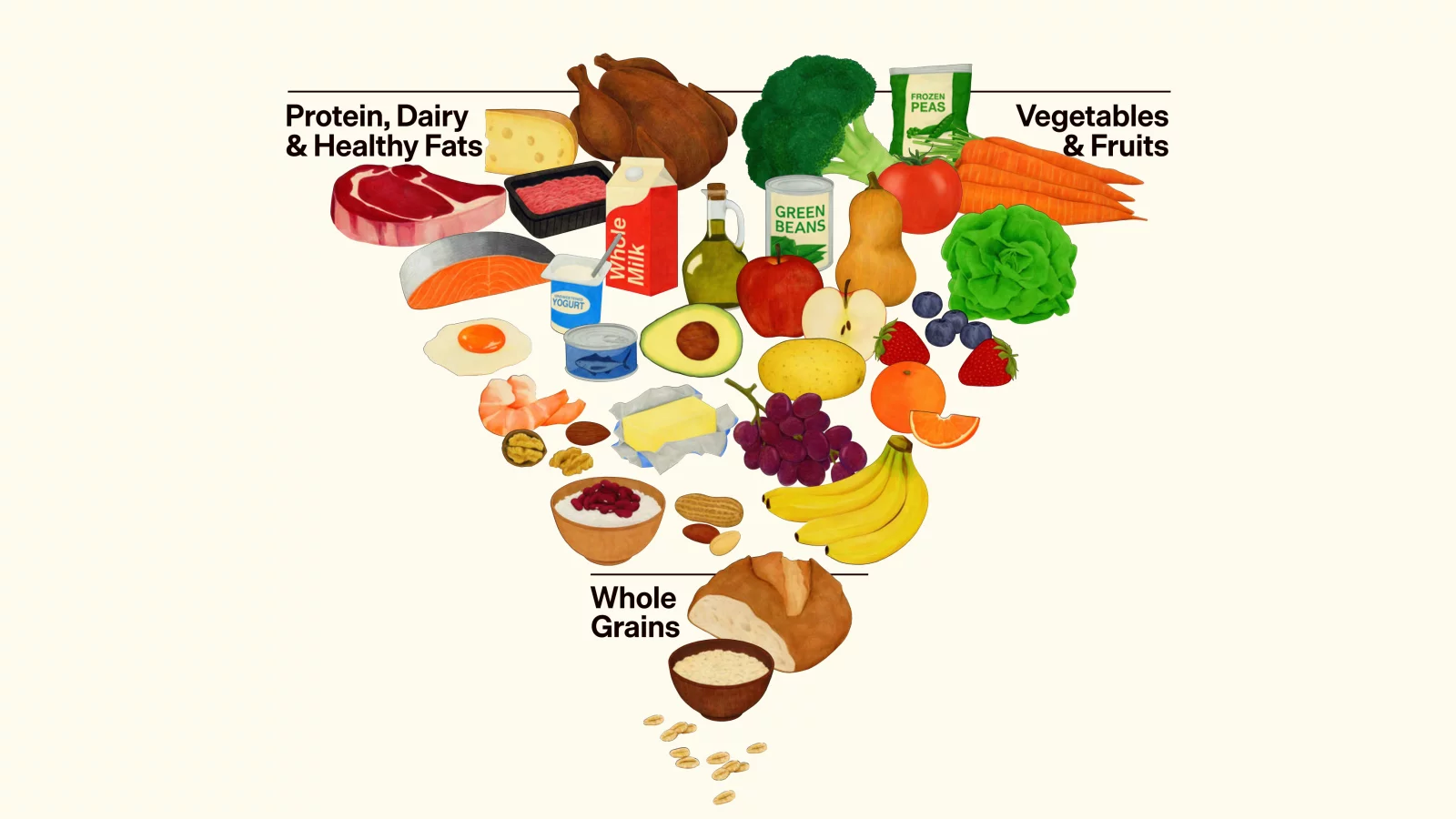
Think of it as an inverted triangle. The widest part at the top is what you eat the most of. The narrow point at the bottom? That's the stuff you go easy on.
Tier 1: Protein & Healthy Fats
Eat the MostThis is your foundation. High-quality proteins and healthy fats keep you full, fuel your muscles, and stabilize blood sugar. The 2026 guidelines raised the adult protein target to 1.2–1.6 grams per kilogram of body weight — significantly more than the old recommendation.
Tier 2: Vegetables & Fruits
Eat PlentyLoad up on vegetables — they're packed with fiber, micronutrients, and antioxidants. Go heavy on the non-starchy ones: leafy greens, broccoli, peppers, cauliflower. Fruits are great too, but prioritize whole fruits over juices — fiber matters.
Tier 3: Whole Grains & Starches
Use StrategicallyCarbs aren't the enemy — but they're not the base of your diet anymore. Think of grains and starches as fuel to be earned, not a default filler. Choose whole grains over refined ones, and use them to support your activity level.
The No-Go Zone
Limit or AvoidHere's the stuff that the old pyramid conveniently glossed over. Ultra-processed foods — classified as NOVA Group 4 by researchers at the University of São Paulo — are linked to everything from obesity to depression. If it has ingredients your great-grandmother wouldn't recognize, think twice.
The Numbers That Matter
No gimmicks. Just science-backed targets from the 2025–2030 Dietary Guidelines.
1.2–1.6g
Protein / kg
per kg of body weight daily
20–35%
Healthy Fats
of total daily calories
14g
Fiber
per 1,000 calories consumed
<10%
Saturated Fat
of total daily calories
We Didn't Make This Up
Every recommendation on this page is grounded in peer-reviewed science and guidance from the world's leading health organizations.
2025–2030 Dietary Guidelines
The U.S. government's "Real Food" initiative, released January 2026. The foundational document behind the inverted pyramid model.
NOVA Food Classification
Developed at the University of São Paulo and adopted in national dietary guidelines across Brazil, France, Canada, and other countries. The peer-reviewed global standard for classifying food by processing level.
National Academies of Sciences
Vitamin and mineral reference values are based on the Dietary Reference Intakes (DRIs) published by the National Academies of Sciences, Engineering, and Medicine — the peer-reviewed standard behind every nutrient threshold in our Nutrition Guide.
USDA FoodData Central
The gold standard for nutritional composition data. Powers our food analysis engine with data from over 300,000 food items.