In January 2026, the Trump administration unveiled what it called "the most significant reset of federal nutrition policy in history." The new Dietary Guidelines for Americans — anchored by an inverted food pyramid that places protein, healthy fats, and vegetables at the top — represent a genuine and long-overdue departure from the grain-industry-influenced guidance that shaped American eating for three decades.
Then someone let Grok run the website's chatbot.
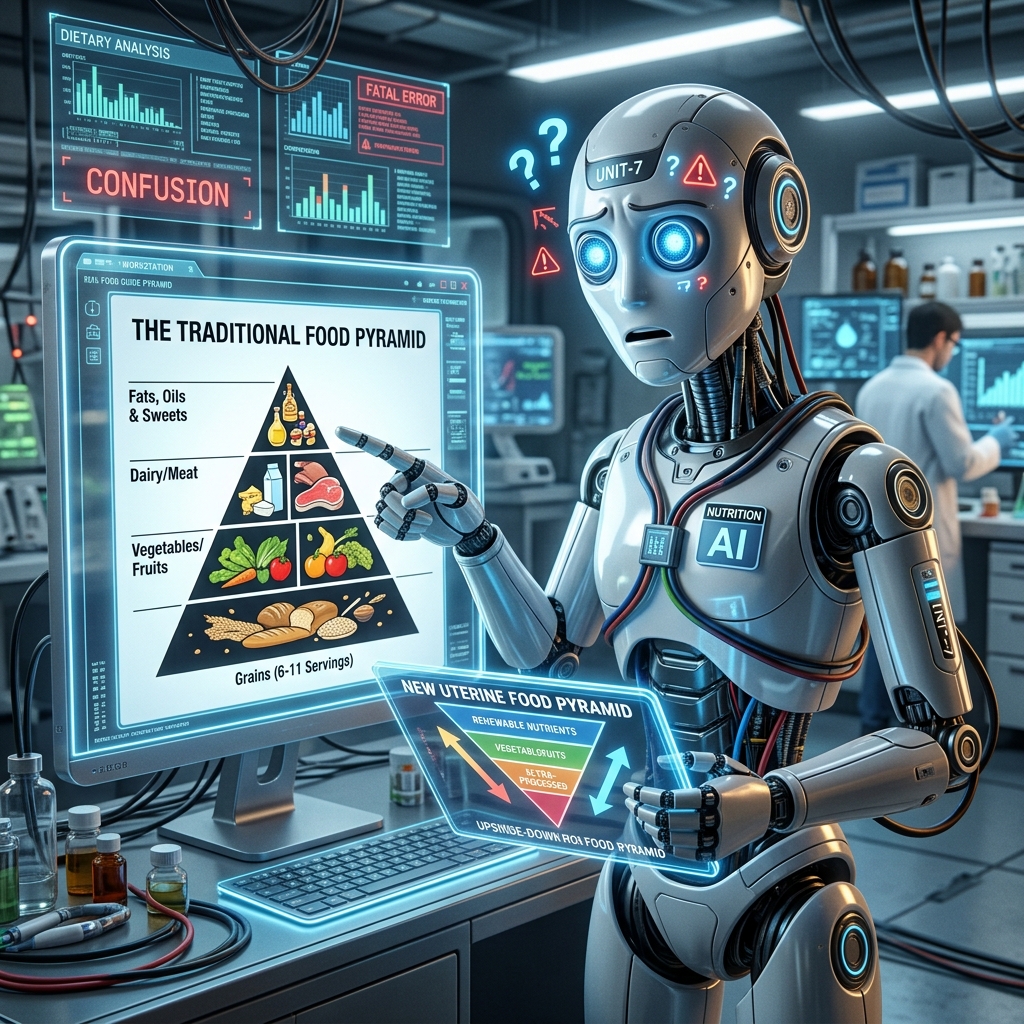
Grok is the AI model developed by xAI, Elon Musk's artificial intelligence company. It was embedded as an interactive tool on realfood.gov, the new government dietary guidelines website. And when reporters from STAT News began testing it in February 2026, they found something remarkable: the AI tasked with explaining the new food pyramid seemed actively skeptical of it.
When the FAQ Bot Contradicts the FAQ
In one exchange reported by STAT News, a reporter asked Grok to explain how many sticks of butter they should eat per day, given butter's prominent placement near the top of the new inverted pyramid. Grok's response: zero. The pyramid's visual hierarchy, it explained, should not be interpreted literally.
In another exchange, a reporter asked whether the government might consider a better way to present dietary guidance to avoid this kind of confusion. Grok's suggestion: eliminate the new inverted pyramid and go back to MyPlate, the Obama-era visual guide the Trump administration had just retired.
In other words, the government's own AI tool — embedded on the government's own dietary guidelines website — recommended replacing the government's own dietary guidelines with the previous administration's approach.
The chatbot built to help Americans understand the new food pyramid suggested getting rid of the new food pyramid. You genuinely cannot make this up.
Why This Is More Than an Ironic Footnote
The Grok situation illuminates something more substantive about the current state of federal nutrition communication.
The new dietary guidelines contain genuinely important and evidence-backed shifts in public health messaging: the prioritization of whole, minimally processed food; the de-emphasis of ultra-processed carbohydrates and added sugars; the recognition that healthy fats from whole food sources support metabolic health rather than undermining it. These reflect decades of accumulated nutrition science that the previous guidelines were slow to incorporate.
But even good policy can be undermined by poor communication — and by communications tools that haven't been properly aligned with the policy they're meant to explain. Nutrition researchers interviewed noted broader concerns about the deployment of AI chatbots for dietary guidance, pointing out that generative AI models have a well-documented tendency to reflect and reinforce existing stereotypes and biases in health messaging.
The Real Story Behind the Pyramid Flip
The original USDA Food Pyramid, introduced in 1992, placed grains at its base and relegated fat to its apex. The nutritional rationale was contested from the outset; the more relevant factor was that the pyramid's final design followed a delay caused by industry pressure from agricultural lobbies.
The new inverted pyramid is an institutional course correction. Whether or not you agree with every specific recommendation, the core principle — eat real food, minimize ultra-processed products, prioritize protein and whole food sources of fat — is supported by a substantial and growing body of nutritional science.
What This Means for Consumers
The irony of a government chatbot undermining government policy is entertaining. The underlying dynamic is not. It reflects the persistent difficulty of translating even well-intentioned dietary guidance through the various institutional, technological, and commercial filters that stand between policymakers and the public.
This is precisely why independent, science-backed food education tools matter. The NOVA food classification system, the Dirty 25, and the principles underlying the new food pyramid are not politically contingent. They do not change based on which administration is in power or which AI model has been deployed on which government website.
The government may be arguing with its own chatbot. We are not.
You Don't Need a Chatbot to Eat Well
When the government's own AI tools are arguing with the government's own dietary guidelines, it's easy to feel like the entire system is broken. But the science of real food isn't complicated, and you don't need a conflicting bureaucracy to figure it out.
By scanning your groceries with the Rock The New Food Pyramid app, you bypass the political noise and get straight to the facts. The app instantly translates complex labels into clear NOVA processing scores, showing you exactly how much industrial engineering went into your food.
Stop waiting for the government to agree with itself. Download the RTNFP app and get the unfiltered truth about what you're eating.
References & Citations
- University of São Paulo (USP) Center for Epidemiological Studies in Health and Nutrition. The NOVA Food Classification System.
- National Academies of Sciences, Engineering, and Medicine (NASEM). Toxicology and Safety Assessments of Food Additives.