Pour one out — or rather, pour one up — because Gatorade just announced it's pulling FD&C artificial colors out of its iconic sports drinks. It's a change that would have seemed unthinkable just a few years ago, and while it's only one bottle on one shelf, it's a sign that the tide is genuinely turning. Let's break down what's happening, what these dyes actually are, and why this moment matters.
What Gatorade Is Actually Doing
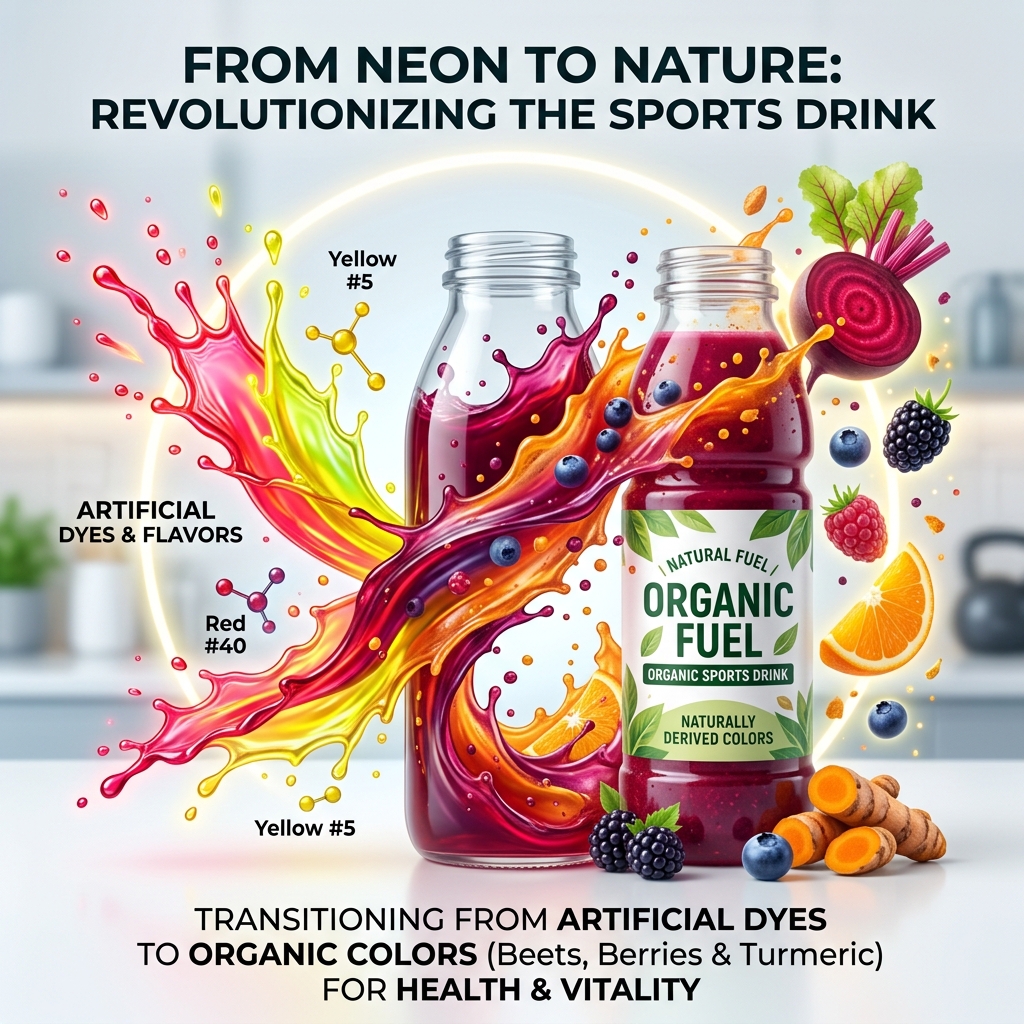
On April 16, 2026, PepsiCo announced that Gatorade's full powder stick portfolio will be free of artificial colors by late spring. Then, later this fall, three of the brand's best-selling ready-to-drink flavors — Fruit Punch, Lemon Lime, and Orange (in both Gatorade Thirst Quencher and Gatorade Zero) — will swap out FD&C dyes for colors derived from fruits and vegetables. Think turmeric, butterfly pea flower extract, and algae-based pigments doing the work that Red 40 and Yellow 5 used to do.
PepsiCo says it's on track to remove artificial colors from its entire portfolio by the end of 2027. The same company also just launched Gatorade Lower Sugar, which has 75% less sugar than the classic formula and zero artificial flavors, colors, or sweeteners. The direction is clear.
Wait — What Are FD&C Dyes?
"FD&C" stands for Food, Drug & Cosmetic, a designation from the 1938 Food, Drug, and Cosmetic Act that tells you a color additive is FDA-approved for those three use categories. The most common ones you've seen on ingredient labels — Red 40, Yellow 5, Yellow 6, Blue 1, Blue 2, Green 3 — are synthetic dyes originally derived from petroleum.
They're cheap, incredibly stable, and produce those ultra-vivid, can-spot-it-from-across-the-gym colors that brands love. That's why they've been everywhere: cereal, candy, sports drinks, yogurt tubes, pickles (yes, pickles), and countless children's medications.
Why Does This Matter?
The conversation around synthetic food dyes has been building for decades, but it's reached a tipping point. Research has linked certain FD&C dyes to behavioral issues in sensitive children, including increased hyperactivity and attention problems. Europe has required warning labels on foods containing several of these dyes for years. Many of the same brands sold in the U.S. with Red 40 are sold in the U.K. with beet juice or paprika extract — same product, different formula, because regulators asked.
Here in the U.S., momentum shifted when HHS Secretary Robert F. Kennedy Jr. launched the Make America Healthy Again initiative, which specifically targeted synthetic dyes and set a voluntary industry deadline of 2027 for their removal. The FDA fast-tracked approval of several new plant-based color alternatives to make the transition possible at scale.
And here's the thing: dye-free reformulation isn't a nutrition overhaul. Gatorade still has sugar, sodium, and processed ingredients. Removing Red 40 doesn't turn a sports drink into a smoothie. But that's not really the point.
The Bigger Picture
The point is that a flagship American brand — one that practically defined neon hydration — just decided that consumers' call for cleaner ingredients matters more than the convenience of petroleum-based dye. And Gatorade is far from alone. In 2025, Campbell's, General Mills, Kraft-Heinz, Mars Wrigley, Nestlé, and Utz all committed to removing FD&C colors. PepsiCo's snack brands — Doritos, Cheetos, Lay's, Tostitos — are on the list too.
This is the food revolution happening in slow motion, one reformulation at a time. Every time a major brand takes a dye out, the supply chain for natural alternatives grows, prices come down, and the next reformulation gets easier. It's the boring, grinding, unsexy version of change — and it's working.
One Small Win
So yes, celebrate this. A sports drink with plant-based colors isn't going to fix the American diet. But it's one more brick pulled out of a wall that seemed immovable not long ago. Keep reading labels. Keep asking questions. Keep rocking the new food pyramid.
The dye is cast — or actually, for once, it isn't.
Spot the Fake Colors Faster
While we wait for every brand to follow suit and drop the artificial dyes, you don't have to guess what's hiding in your drinks and snacks. The power is already in your hands.
With the Rock The New Food Pyramid app, you can scan any barcode to instantly expose FD&C colors and other synthetic additives. It cuts through the neon marketing, provides an unfiltered ingredient breakdown, and points you straight to naturally colored, real-food hydration alternatives.
Don't wait for 2027 to drink clean. Download the RTNFP app today and know exactly what you're fueling your body with.
References & Citations
- University of São Paulo (USP) Center for Epidemiological Studies in Health and Nutrition. The NOVA Food Classification System.
- National Academies of Sciences, Engineering, and Medicine (NASEM). Toxicology and Safety Assessments of Food Additives.