
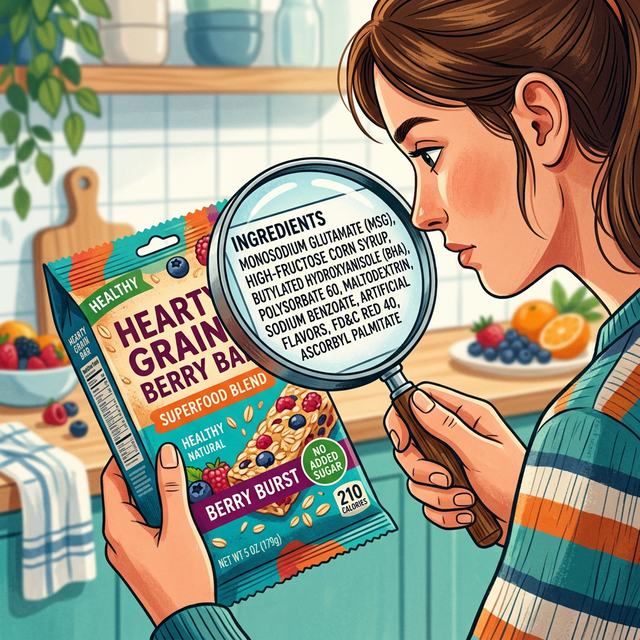
I have a doctorate in marketing. And I can tell you with absolute certainty: food labels are designed to make you buy, not to inform you.
The food industry spends over $14 billion per year on advertising in the United States alone. They employ teams of psychologists, designers, and marketing experts whose entire job is to make unhealthy food look healthy. And the front of the package is their canvas.
Here are the 5 biggest label tricks they use — and how to see through them.
Trick #1: "Made With Whole Grains"
What you think it means: This product is a healthy whole-grain food.
What it actually means: The product contains some whole grains — potentially as little as 1-2% of the total flour. The rest can be refined white flour, sugar, and additives. There's no FDA regulation on the minimum percentage required to make this claim.
What to do instead: Check the ingredient list. If "whole wheat flour" or "whole oats" isn't the first ingredient, the claim is misleading.
Trick #2: "All Natural"
What you think it means: This product is clean, wholesome, and free from artificial ingredients.
What it actually means: Almost nothing. The FDA has no formal definition for "natural" on food labels. A product can contain high-fructose corn syrup, "natural flavors" (which can include hundreds of chemical compounds), and highly processed ingredients — and still legally call itself "all natural."
What to do instead: Ignore the front of the package entirely. Flip it over and read the ingredient list.
Trick #3: "Lightly Sweetened"
What you think it means: This product has very little sugar.
What it actually means: Nothing — there's no legal definition for "lightly sweetened." A cereal with 12 grams of sugar per serving can use this term. For reference, the American Heart Association recommends no more than 25 grams of added sugar per day for women and 36 for men. One "lightly sweetened" bowl can eat up half your daily limit.
What to do instead: Look at the Nutrition Facts panel. Check "Added Sugars" — and remember that sugar has over 50 different names on ingredient lists, including maltodextrin, dextrose, cane juice, rice syrup, and many more.
Trick #4: "Made With Real Fruit"
What you think it means: This product contains meaningful amounts of actual fruit.
What it actually means: It contains some fruit — often as little as 2% fruit juice from concentrate, buried under sugar, water, and artificial colors. The "fruit" in many fruit snacks, juices, and gummies is essentially flavored sugar water with a trace of fruit to justify the claim.
What to do instead: Check where "fruit" appears on the ingredient list. If it's not in the first 3 ingredients, the product is not meaningfully a fruit product.
Trick #5: "Natural Flavors"
What you think it means: The flavor comes from natural, wholesome sources.
What it actually means: "Natural flavors" is an umbrella term that the FDA allows to cover over 3,000 different chemical compounds — including solvents, preservatives, and emulsifiers. A strawberry "natural flavor" can contain over 50 chemicals that have nothing to do with strawberries. The only requirement is that the original source was once derived from something natural.
What to do instead: Be skeptical of any product that lists "natural flavors" without specifying what they actually are.
The One Rule That Works
Ignore the front of the package. Read the ingredient list.
If the ingredient list is longer than 5-7 items, contains words you can't pronounce, or includes substances that sound like they belong in a chemistry lab — you're probably holding an ultra-processed product.
Or you can make it even easier: search any food on Rock the New Food Pyramid and get the real analysis instantly — no marketing degree required.